Friday, March 17, 2017

Waiter, there's a . . .


        . . .rock in my river!
       When I was first re-aquainting myself with fishing several years ago (to satisfy my son's initial interest in the sport), I fell back on what I had known and done in my high-school days: either "bait-and-a-bobber" or spinner fishing. The hope (and sometimes success) was that some roaming bass (or crappie or bluegill) would either be fooled, or enticed, to swallow the lure or bait. An incredible fight would ensue, and, triumphantly, I would bring the victim to the net (and then home, to be breaded and fried). Those early fishing experiences were generally on a small lake or some other impoundment -- in other words, on still-water.  I could usually see any hazards, like downed trees, rusted-out car-bodies, etc.  And, seeing them, I would avoid them, as I didn't want to lose that worm!  I was not a particularly sophisticated fisherman, simply one who cast the hook into the water and hoped for the best (and certainly NOT to get snagged).
        As I indicated, when I re-joined the angling ranks, I went back to ponds with my (and my son's) spinning rods. Shortly thereafter, however, I was introduced to the addiction of fly-fishing.  And, lo and behold, I learned you could fly-fish on ponds! My success rate didn't improve much. My companions (well, my teachers), of course, saw stillwater fishing as only a part (and, truth be told, in Colorado, a lesser part) of fly-fishing. The "true" sport was on the rivers of the Front Range and Western Slope. Wishing to "be in the know" (or part of the fraternity), I began to accompany experienced anglers on their weekend outings. I quickly discovered that there were some major differences between stillwater- and stream-fishing (aside from the obvious that the water is FLOWING).

       One of those many differences was that the obstacles that I tried so assiduously to avoid were no longer obstacles, they were now "structure", and the fish were less prone to cruise about, but to hang around the structure waiting for the current to bring the food to them. So, beneath downed trees, or along under-cut banks -- those were great places to find fish. There was, of course, always the threat of losing the flies at the end of the line to the angler-foiling tree! But, nothing ventured, nothing gained. (Frequently touted "wisdom" is that if you're not losing a lot of flies, you're not doing it right.)
       There are other obstacles of course (fortunately, not as many rusted-out car-bodies). They could certainly snag my line or capture my hook. They are:  rocks.  Sometimes they are large and protrude above the surface of the water; other times they are submerged, and the only evidence of them might be some swirls on the surface. And, so, relying on my old memories, I was very wary of those rocks. But, as the picture above shows of "Prime Lies in Red", a very likely location for the trout are behind those wily hook-catchers. (There are other bits of prime trout real-estate with respect to rocks as well). The reason for all of them being significant is that the current flowing into, around, and behind the rocks concentrates the floating bug-life into a nice feed-bag.
        I've learned, therefore, that avoiding obstacles (or, in other non-fishing circumstances, trying to remove or destroy them) can decrease my possibility of gaining something I want (i.e., a large trout!). The "learning" is to focus less on the obstacle and more on its surroundings. The marginal areas are the often the most productive.*
        This "strategy" translates into other arenas, I believe, as well. I just think how much effort we spend on trying to convince the "other side" -- politically or theologically -- of our position (i.e., destroy or remove the rock). Social science has shown that that is NOT productive. But there are many on the margins who are willing to "take the bait", i.e., engage in a meaningful encounter. I recall that, in the late 1990s, I commented to a campus minister colleague that the sign hung on the front of his building that claimed "Dropping bombs is a sin!" was not going to bring in "questioners" to talk with him, but was, in effect, creating a barrier to conversation, and thus to change-of-mind. He was trying to destroy the obstacle rather than engage the questioning margins.
        I still don't like losing my flies to rocks in a river. But I'd much prefer to be in a place where I can encounter another being.


Blessings,

Gary

*  The same is often true in birdwatching -- the area where a forest gives way to a field, or a field to a river, generally produces a larger variety of bird species. 

Friday, March 10, 2017

Be here now


     I remember hearing Iliff School of Theology''s  late Professor Vincent Harding say something to the effect that "I live in a country that does not yet exist".  Harding was a important figure in the fight for Civil Rights "back in the day". He was a friend and colleague of the Rev. Dr. Martin Luther King. He wrote much of King's famous anti-Vietnam speech, "A Time to Break Silence". In short, he was passionate about working to make the "country that doesn't not yet exist" into a reality. In other words, Harding lived HERE; he was realistic about the current situation, but hungered for something better.
      What a difference from those who would look (or live) THERE, with "there" defined as being either in the future or the past. Living in the past "there" means trying to replicate patterns or institutions that may have been good once, but are not about HERE. Living in a past "there", one cherry picks the good memories, without recalling the bad ones.  Likewise, living solely in a future "there" means discounting the realities of HERE that need to be addressed now to ensure that that future "there" can be possible.  
        “Wherever you are is called Here" writes poet David Wagoner, "And you must treat it as a powerful stranger.”* I heard this in a interview with Pádraig Ó Tuama, and it struck home, especially given our propensity not to live in the present -- the present moment or the present place. For if we are HERE we must live with the powerful strangers that we encounter.  So much easier to go THERE, either in time or in (virtual) space, than to deal with the realities before us.
        Of course, however, the "powerful strangers" that we may seek to avoid just might be our allies (even if in ways they don't realize) rather than our adversaries. I have learned that lesson too often to keep count, but not often enough that I consistently live it.
         Who knew HERE could be so complicated!? But it may make for a much better THERE.

Blessings,

Friday, March 3, 2017

Not so . . . fast


      In the spring of 1996, I took a group of students to Costa Rica for a “mission trip”. At the time, I was Episcopal Campus Minister at UNC-Charlotte, and the trip was with other Episcopalian students from around North Carolina. Our judicatory had just established a “companion” relationship with a similar judicatory in that country, and we were going to be one of the first sets of “ambassadors”. As we started recruiting students, there was a LOT of excitement. Not only were the students jazzed about going to Costa Rica, they were also looking forward to “doing something meaningful” (which meant something like painting a school, or building something — i.e., “doing something “tangible”).
      As the conversations between North Carolina and Costa Rica continued, however, it became more and more clear that the folks in Costa Rica were (a) very interested in having us come, but (b) were not interested in having us come to "do something".  Their rationale was along the lines of “we’ve had enough of gringo coming down here to fix us.” What they proposed instead was more of a “learning trip”. They would host us and show us why/how the Episcopal Church was established in Costa Rica, and what it was doing now. And, along the way, we’d visit some significant sites (a rain forest, the national shrine, etc.). That change in rationale for the trip disappointed some of the students, but I think it was for the best; I think we all learned a lot more -- especiallylabout privilege.
       I recalled this experience from more than twenty years ago as I prepared my homily/sermon for Ash Wednesday this week. Ash Wednesday is the beginning of Lent, a 40-day period of penitence, reflection, and fasting leading up to Easter.  The reflection is often focused on one’s mortality, marked in a physical way by a smudge of ashes on the forehead, accompanied by the words, “Remember that you are dust, and to dust you shall return”. And, coincidentally, this year, Ash Wednesday fell on the same day as the beginning of the Baha’i 19-day fast leading up to their New Year. In other words, “fasting” was on my mind.
       Thinking about Ash Wednesday and fasting brought Charles Dickens’ great novel of the French Revolution, A Tale of Two Cities.  One of the minor players in that drama is simply described as a “mender of roads.”  His only child is run down and killed by an aristocrat who thought nothing other than how inconvenient it was that the peasants couldn’t keep their children off the street and out of the way of his horses—”they (i.e., the horses) weren’t hurt were they?”   The road-mender eventually took revenge on the aristocrat and killed him—an individual example of many of the events leading to the storming of the Bastille.  Subsequent to that event, however, the mender of roads was still going “forth daily to hammer out of the stones on the highway such morsels of bread as might serve for patches to hold his poor ignorant soul and his poor reduced body together.”  And, as Dickens wrote, he “worked, solitary, in the dust, not often troubling to reflect that dust he was and to dust he himself must return, being for the most part too much occupied in thinking how little he had for supper and how much more he would eat if he had it.”
      In other words, the mender of roads didn’t have the privilege of reflecting on his mortal nature — so much was he involved in providing the bare necessities.
      I was struck by the realization:  the privilege of humility.  From my old office window in Berkeley, or driving down Colfax in Denver, I could look out on those who walked up and down the street looking for a morsel.  I sit in my warm home and office, rarely thinking of those outside who are bundled up against the chill.  And I have the audacity to think that “humbling” myself by smudging ashes on my forehead might please God.  That “giving up” sugar, or television, or wine for 40 days—or even “taking on” some work of charity or devotional reading—is some great spiritual exercise.  I—no, we—stand convicted by the words of Isaiah, “Look, you served your own interest on your fast day” (58.3).  Even a non-dramatic “in secret” fasting has been suggested by Dickens to be a privilege.
      Ashes, self-denial and humbling—even fasting —can only be initial response.  Considering how to respond to the fast God chooses, that is, in the words of Isaiah “ to break unjust fetters, to undo the thongs of the yoke. to let the oppressed go free, and to break all yokes.  Is it not sharing your food with the hungry, and sheltering the homeless poor; if you see someone lacking clothes, to clothe them?”(58.6-7)—in other words how to provide everyone with the “privilege” of humbling themselves is the real discipline before me.  Indeed, it we take the biblical witness seriously, it is the discipline before us all.

Friday, February 24, 2017

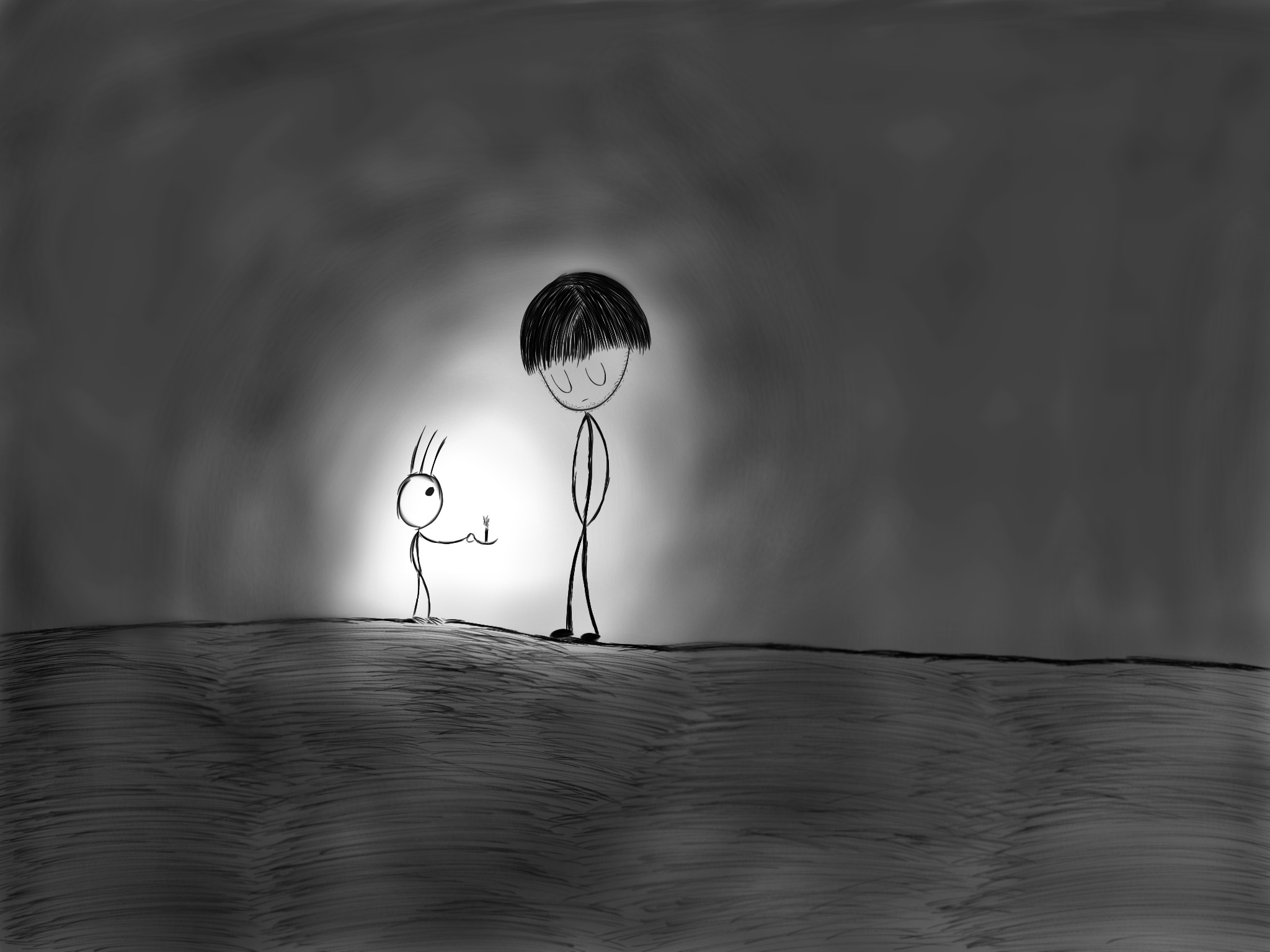
Lighting a Candle


     Last Sunday evening, I went with some students to Mile Hi Church here in the Denver area. Mile Hi is "New Thought" church, the largest of its denomination in the country. One of their occasional offerings is an Interfaith/Multicultural (I AM) Ministry where they highlight a different religious tradition (or sub-tradition). Last Sunday, the program was on "Kaballah and the Tree of Life", or Jewish mysticism. Having never been to Mile HI for a service of any kind, I was pretty interested in being there, not only for the mysticism program, but just to experience the congregation (about which I've heard a lot over the years I've been here). I was not disappointed in either.       One of the speakers during the service told an old Hasidic story about a man who was concerned about the darkness of his basement. He went to his rabbi and asked what to do. The wise rabbi suggested he might try sweeping out the darkness with a broom. That didn't work. "Try beating it out with this ruler." That didn't work."Try shouting the darkness out." That didn't work, either. Then the rabbi lit a candle and walked with the man down the stairs into the basement. It was no longer dark.  "We dispel darkness not by sweeping it away, or by violence, or by loud shouting, but by bringing light into the world." *
       The next day, I had cause to read a Surah from the Qu'ran,  Ash-Shu'arah ("The Poets"). Much of the surah stresses that there are many people who, regardless of the "evidence" or signs or persuasive texts they are given, will not end up believing. That, it seems to me to be suggested, is no fault of the one who would try to be persuasive; it is simply the nature of things. A refrain throughout the surah is, "Verily there is a sign in this, but many of them do not believe" (verses 8, 67, 103, 121, 139, 158, 174, 190).**        We seem to have come to a point in our society where sweeping, shouting or beating the "darkness" we are experiencing is having little success, except in tiring many of us out. In the words from the Qur'an we saw above, "there is a sign in this, but many of them do not believe". There certainly IS work to be done; I'm not suggesting otherwise. But I wonder if, instead of picking up a broom or a ruler, we quietly bring some light into the lives of those around us. The opportunities abound, if we only look. It may be as simple as what a friend on campus told me this morning: "I try to smile at everyone I see these days; we all need it."
        Work for justice, yes. But also smile. Light a candle.

Blessings,
Gary

* The whole service can be viewed at Mile Hi' Interfaith Multicultural (I AM) Ministry website.
** Translation by Ahmed Ali. Al-Qur'an:  A Contemporary Translation (Princeton University Press, 1993), 312-20.

Friday, February 17, 2017

Well, I declare!


     I recall re-entering the United States after our last trip to China. Several hours prior to landing, the flight attendants came by and handed us a little sheaf of papers -- our customs declaration forms. Anyone who has traveled abroad knows the drill:  wrack your brain to recall what you may have purchased and its value (as well as how much foreign currency you may still have). You also need to mention any food/drink items you still have. If you have more than the "legal" limit, you may be liable for duty tax (or confiscation). Like so many other laws, the rules are often inscrutable, and the process of filling out the form was, for me, anxiety-producing. I began to wonder WHY I had purchased ANYTHING!  I began to think the verse from the biblical book of Job was spot-on:  "Naked I came forth from my mother's womb; and naked shall I go back again" (1.21)! Acquire nothing!
      This memory came back to me yesterday during our monthly "Soul & Role"* discussion. We were discussing a poem - "Burlap Sack" by Janet Hirschfield:

A person is full of sorrow
the way a burlap sack is full of stones or sand.
We say, "Hand me the sack,"
but we get the weight.
Heavier if left out in the rain.
To think that the stones or sand are the self is an error.
To think that grief is the self is an error.
Self carries grief as a pack mule carries the side bags,
being careful between the trees to leave extra room.
The mule is not the load of ropes and nails and axes.
The self is not the miner nor builder nor driver.
What would it be to take the bride
and leave behind the heavy dowry?
To let the thin-ribbed mule browse in tall grasses,
its long ears waggling like the tails of two happy dogs?


In our subsequent conversation about "leaving behind the heavy dowry", it occurred to me that, often, at the end of the day, I take the "heavy dowry" of the day's events home with me. My "burlap sack" becomes filled with the concerns of the day, as well as memories from the past, and expectations for the future -- many of which have little to do with my life outside of my work. Yet they go home with me sometime preventing me from fully attending to family concerns (as well as interrupting sleep!).
       I brought this up to the group, and began joking that, "Wouldn't it be great if there were some kind of "custom's agent" at the door when we left work, checking to see if there was anything we should leave behind? And maybe we should write up some kind of 'declaration' that we have to present to another 'agent' when we arrive home to see whether or not we could bring that 'baggage" into the house?"  While this question occasioned a goodly amount of laughter, that laughter (at least on my part) masked a dis-ease with how much one part of my life -- i.e., my work life -- can intrude on another -- more important -- part of my life:  family.
       So, now I'm wondering whether or not I should create a sort of "declaration form" that I fill out during the last 15 minutes of my work day. That way I can be clear about what I'm taking home, and what will still be waiting for me on my desk when I return. And maybe another such form for the last 15 minutes of the day...?
      Well, I declare! I think it would be GREAT to let my "thin-ribbed mule.... browse in tall grasses, its long ears waggling like the tails of two happy dogs"!

Blessings,
Gary

*"Soul & Role" is a monthly conversation that aims at giving participants an opportunity to reflect on how their "role" at the university interacts with their soul. More information on the program can be found here.
** After: Poems. © Harper Perennial, 2007

Friday, February 10, 2017

It won't miss me

 
   Many folks know that I am pretty passionate about hats. Yes, I do, sometimes, wear "baseball caps" (but NEVER "truckers' caps" -- because the mesh backing doesn't work well for bald folks). Mostly, however, I want a hat with a real brim all the way 'round. And, to have a bit of fun with my hats, I often change them seasonally. So, when January rolls around, I trade in December's Santa-Hat for a cowboy hat in recognition of Denver's National Western Stock Show. And, this January, when I changed my Facebook profile photo, someone commented "Longmire!" And, then, several days later, an interview aired on Colorado Public Radio with Craig Johnson, the author of the Longmire series of mysteries (set in Wyoming-hence the cowboy hat). Those two unrelated occurrences prompted me to check the first of the series, The Cold Dish*, out of the library.
      I do like good mysteries, and this particular series now holds some interest for me! The characters are well-drawn (and quirky!). It's not that often, however, that, in reading popular mysteries, I run across lines in the dialogue that stop me short. In this case, it was a conversation between two Native Americans/Indians**; they were discussing whether one of them should go visit a mutual friend. In response to The Bear's question "Is [Lonnie] home today?", The Buffalo replied:  "He has no legs, so where would he go? He's home everyday; he watches television? He watches everything. It is as if he thinks the things on the television aren't happening if he's not there to watch?" (p. 146). It is as if he thinks the things on the television aren't happening if he's not there to watch.
 I immediately reached for a pencil. It being a library book, however, it wasn't to underline the sentence, but rather to write it down.
       There's almost a Zen koan-like quality to that sentence, like "If a tree falls in the forest, and no one is there to hear it, does it make a sound?" Certainly, of course, events do happen regardless of whether or not they make it to the news-feed. But the sentence started me thinking about how much we CREATE the hubbub which then makes us crazy.  In other words, if our Facebook or Twitter feeds (or TV/radion) are driving us to distraction, why do we not just STOP accessing them? I have gone on a "Facebook Fast" in the past, and I can say that I didn't find myself disconnected from what was going on --- there was always, of course, "water-cooler conversation" that kept me informed. On the other hand, the peace that came from not always hitting "refresh" so that I knew who was commenting on what outrageous thing some politician said . . . well, it was pretty wonderful.       Perhaps I was primed to react to the dialog-line because I had just read a blog post by John Metta (who writes for Medium and Al Jazeera). He titled the post:  "I'm Done Drinking the Draught of Despair." Metta writes that he can no longer keep taking in all of the media deluge: "Drinking this liquid is not helping me accomplish anything. It is certainly not helping me sustain myself for what will need to be a significant and sustained effort. More to the point: it is actively harming me." In the article, he outlines what he will do that is positive; he is not disengaging, but rather engaging in a different way.
        Too many people I with whom I talk are "fried" or "frazzled" . . . and they'll remark about how the "news" is getting them down, how every second "tweet" depresses them, how the "Comments" after Facebook posts are so negative. Yet, if I ask, "Why not shut it off?" they look at me like I just stepped off some planet orbiting Alpha Centauri.
        We don't have to be sucked in. There is always a choice. And it doesn't have to be a choice between opposites; it can be a choice between "A" or "Q", or an apple or banana. There is usually more than one way to say "Yes." After a month of saying "Yes" to my cowboy hat, it was time to say "Yes" again to my gray felt fedora. The cowboy hat will wait 'til next January; I doubt it will miss me.


Blessings,
Gary

* Penguin Books, 2004.** You'll have to read the book to understand why I used both terms!

Friday, February 3, 2017

It's a BIG village at DU!

      Last Tuesday, about 500 members of the DU community crowded into the Driscoll Ballroom for a (relatively quickly put-together) response to President Trump's "Refugee and Muslim Majority Country Ban". The event was launched into existence on Saturday afternoon by Prof. Andrea Stanton of the Religious Studies department, but quickly gained an incredible head of steam. Publicity didn't really start spreading until Sunday afternoon -- while the details were still in the works. But, by Tuesday afternoon, we had a slate of speakers from the University Counsel, a Political Scientist, an International Studies scholar, folks from Human Resources and the Office of Internationalization (as well the University Chaplain).        
       When we filed into the ballroom, there were probably chairs for about 150 (we had only seen about "60 attending" and "90 interested" on the Facebook event). But, as the clock edged towards noon (and reflecting that classes had just let out), more and more people streamed in. Chairs began being set up . . . and there were too few to seat everyone. I don't think anyone complained.         We started a bit late, since we were still setting up chairs, and, after an un-scheduled appearance (and address) by Chancellor Rebecca Chopp*, we turned to the speakers who did a wonderful job of laying out both the nature of the Executive Order, as well as how it was currently, and might be, affecting the DU campus. And, then, we opened the floor to questions and comments.
         Only a few of the questions were "procedural" (i.e., "What happens when  . . .?"). What was gratifying were the numbers of questions about "What can we do to help our affected population? How do we get involved? The answers:  "This group is doing something; contact me." 'We're arranging for immigration attorneys to come on campus regularly." What was humbling were the number of Muslim students (both graduate and undergraduate) who came forward to tell of their stories, and their great appreciation for the event and the level of support they felt. It was a remarkable event; both that afternoon, and in comments on Facebook, many said they had never been more proud of DU.

           I have been in two "official" meetings since Tuesday afternoon, one completely devoted to DU's response, and the other having a large portion of the discussion about the EO and DU. The meetings have involved people from all over campus -- from Health and Counseling to Engineering, Athletics & Recreation to "No Lost Generation" (a student group devoted to refugee work). There is a HUGE village of folks here in the 80208 zip code who are doing all they can to mitigate the impact of the Executive Order, and to provide hope to those affected. 
         Several offices have worked to compile an ever-updating and changing set of resources and events. Resources can be found here, and specific events can be found here.  Both pages will be updated as things change.
         There is a BIG village at DU. Yet, in my (almost) ten years here, I've never seen it so LARGE! That says a lot about who/what we are as a community. And it speaks volumes about what we can do.  

Blessings,
Gary

* The Chancellor's official statement in response to the Executive Order can be found here.