
A number of years ago, when I was Episcopal Campus Minister at UC-Berkeley, as part of my job, I "managed" a student residence (in a building over a hundred years old!). Three floors, eighteen students. Men and women. Different races/ethnicities. Different religious backgrounds. Both graduate and undergraduate (although mostly the latter). Part of the "management" meant addressing clogged drains, the internet not working, dealing with various "pests", taking the change out of the laundry machines, painting vacant rooms, etc. All of that meant that I was often walking through the building on a relatively regular basis.
Walking through a residence hall, one often hears snippets of conversations; my experience at Berkeley was no different. Most often I'd hear one half of a phone conversation, or some discussion of the menu for the evening. But every so often I'd hear a piece of a "religious" conversation, frequently a question. These were not my conversations, and I was rarely invited to participate--and I didn't eavesdrop--so I wouldn't hear the whole thing. Plenty of times, of course, I wanted to interject something, especially when I heard an incorrect fact in an answer. Again, however, these were not my conversations, so I'd wander off about my business, speculating about what brought on the discussion and how it played out.
Late-night residence hall conversations are central to the university experience. Those dark hours lower some defenses, but also seem to evoke the need to address mystery. So, during the wee hours, questions about "What do you believe?" or "If there's a god, what's he (or she) like?" arise like mushrooms. And, as I remember from my collegiate days, those discussions were formative; I changed my mind over and over again. I developed a much more expansive world view.
All of this came to mind after hearing something earlier this week about how, in much of what passes as conversation (or debate) these days, questions are often given short shrift in light of authoritative answers. An answer is given, but follow-up questions are increasingly rare in our age of sound-bites. So now we hear a cry for "fact-checkers", as if "facts" will answer the deeper questions. Would my desire to correct the answers given by the Berkeley residents, for example, really address the deeper longings that stood behind the initial question?
We need reinvigorate the art of question-asking, continual question-asking! Ancient maps would sometimes show the known world, the world of facts, the world that could be ascertained. Beyond that was the realm of dragons. Venture there, and you were in danger. Thankfully many explorers took the risk of going into those "dragon-infested" waters. As a result our knowledge was enriched, our experiences were deepened. The values of the explorers were challenged, to be sure, especially as exploration turned to colonization. But, then, for many, so was their capacity for wonder and compassion.
"Here there be dragons" didn't stop the explorers. Indeed, the dragons seemed to be lures for growth. A little further from sight of land, a little further from safety. More hope for something new, something valuable.
Bring on the dragons! Bring on the questions! And let's go deep and far together!
Blessings,
Chaplain Gary
|

Saturday, October 13, 2012
There be dragons!

Friday, October 5, 2012
Don't eat the menu!

The idols of the nations are silver and gold,
made by human hands.
These have mouths but say nothing,
have eyes but see nothing,
have ears but hear nothing,
and they have no breath in their mouths.
Their makers will end up like them,
everyone who relies on them.
This selection from the Hebrew Bible's Psalm 135:15-18 is a relatively common trope in that collection of scriptures (an almost identical list is found in Ps. 115:4-8). Indeed, the commandment "You shall not make yourself a carved image or any likeness of anything in heaven above or on earth beneath or in the waters under the earth" (Ex 20:4) was understood to be one of the main distinguishing features between the Israelites and their neighbors. The Israelites were to recognize that the divine--"I am Who I am" or "I will be Who I will be" was well beyond their competence to understand, let alone depict.
This teaching is not confined to Judaism. The Tao Te Ching begins: "The tao that can be told is not the eternal Tao. The name that can be named is not the eternal Name." In the early centuries of Christianity, there was a fierce debate over whether or not images, or icons, of Jesus and the saints could be made -- a debate that had resonances centuries later when the Puritans disfigured or destroyed statues and paintings in the churches of English Roman Catholics. And the recent uproar over the anti-Muslim film made here in the U.S. traces some of its intensity to an understood religious prohibition of visual representations of the Prophet Mohammed.
Attributed to 9th-century Buddhist teacher Lin Chi is the statement, "If you meet the Buddha on the road, kill him." Sam Harris, one of the so-called "New Atheists", in an online article in the Buddhist magazine Shambhala Sun suggests that "Kill the Buddha" should be replaced by "Kill Buddhism". His argument is certainly not that Buddhists should be killed, but rather that Buddhism has begun to obscure the teachings of the Buddha (he extends that claim -- that the 'ism' has replaced the heart of the teaching -- to all other religions as well). He thus stands in a long line of iconoclasts, stretching back to the Hebrew poets and prophets!
I sort of doubt that Israel's early neighbors were as clueless as they were painted, i.e., that they actually thought that the manufactured representations WERE the deities themselves. Who knows? They may have had internal critics pointing out the very same temptation? But what is it about us that we need to reduce an ideal to something controllable, something lesser, something more in our image? Certainly one of the dangers is that we can exclude others who don't agree with our depiction (a recent article in the Chronicle of Higher Education discusses the "color" of images of Jesus*). This is as true in politics as in religion, by the way!
Another danger, however, is that we can become so enamored with our representation that we begin to believe it. And, since the representations are generally pretty hollow, our own spirits become depleted, our compassion dimmed. In a recent interview, Rabbi Rami Shapiro said, "Theology is like going into a restaurant and eating the menu. I'd rather have the food."
Wouldn't we all? Then why are we so satisfied with the menu? And what might happen if we actually bypassed a predictable menu to what an unpredictable Chef might prepare for us?
Blessings,
Chaplain Gary
*Blum, Edward J., and Paul Harvey, "The Contested Color of Christ" in The Chronicle Review (Sept 21, 2012), B6-9.
|
Friday, September 28, 2012
From the inside, out.

There has been a "strange nexus in the Force" this week, as many things I've been reading, and hearing, have pointed in (primarily) the same direction. The first was aninterview with two leaders among, what are called, the "New Evangelicals". One was Jim Daly, the new president of Focus on the Family; the other was Gabe Lyons a younger man who is the founder of a sort of TED-like group called "Q: Ideas for the Common Good". Daly was picked to follow upon Focus's founder, James Dobson. Lyons was brought up in Lynchburg, VA, the home of Jerry Falwell's church and college (Liberty University) -- and he was a product of all that Lynchburg offered.
In the interview, both men realized that the presentation of Christianity that they had inherited was increasingly viewed with suspicion (especially among the younger generation), and was not necessarily what THEY understood the Christian message truly to be about. Daly pointed out that his organization had been "gentle to those inside" and "harsh to those outside" the faith-boundaries. And, he observed, Jesus' behavior was exactly the opposite: calling to task the "religious" folks, and welcoming those from without the fold. He suggested that members of religious traditions (in his, case, certainly, Christians) should spend more time calling their own to faithfulness instead of lambasting the culture for not living up to the standards the faithful themselves couldn't achieve. I have also been reading the New Testament book, the Acts of the Apostles. This is a story of the early expansion of the Christian movement in the first few decades after the death of Jesus. In a couple of places, the apostle Paul (and his message) comes into contact with significant centers of Greco-Roman culture: Athens and Ephesus. Athens, of course, was a center of learning and philosophy; Ephesus a great trade center, as well as cultic center for the goddess Artemis. In Athens, Paul observes (with some disappointment) how many "idols" dotted the city (Acts 17.22-32). Yet, in his speech to the citizens, he doesn't criticize the Athenians, but rather starts with their propensity to religiosity. That approach generates some dialogue. In Ephesus, the story was a bit different (Acts 19.23-41). After spending several years there, the early Christian community had been successful enough that, for some reason, some of the business folks felt threatened enough to stir up a mob. There is no indication in Acts that the Christians were being critical of the Artemis cult; they were apparently just keeping to themselves, but living a lifestyle that, itself, was perceived as a threat, perhaps because it was more attractive than the civic religion. The third part of the nexus is simply all the political advertising to which we've been subjected these last few weeks (and which will only intensify over the next few). Both sides are spending vast amounts of money criticizing the other. Significantly fewer ads trumpet successes. The theory seems to be "Create fear of the other! And then we'll have a large group of fearful people who will vote the same way, although they may agree on little else!" What are our own (individual and collective) strengths and weaknesses? Maybe focusing there might be a good idea. Who knows, if our own house were more attractive, we might get more visitors? Or, put another way, perhaps if we tend to our inner workings, we may get to the point where we can fly?
Blessings,
Chaplain Gary
|
Friday, September 21, 2012
Cultivating joy!

Last evening my wife and I went to a DU volleyball game; it was the team's first real home game of the year. We had learned to really enjoy volleyball last year, and had been looking forward to the fall for some time. We were not disappointed. It was an exciting match, and DU's ultimate victory (3-0) was the icing on the cake.
As Coach Mahoney said in a post-game tweet, the atmosphere was fun. And a lot of what made it fun was the presence of several of the other teams. Last year the men's swim team became de-facto cheerleaders (with a twist -- you'll have to attend a game to see what that is!). This year, the swim team was joined by the men's basketball who did their level best to distract the opposition. Given the fact that they were all dressed like refugees from a Jane Fonda or Richard Simmons aerobics video, that the other team was able to focus at all was a testimony to their training and focus. And then the gymnastics team, on the opposite side of the floor from us, was cheering loudly and doing cartwheels in the bleachers when we scored. Members of the Athletics administration, most of the fans, and we were smiling broadly throughout the match. It was fun; it was joyful. After we got home, I was reflecting on the mood of the evening. The smiles. The laughter. The excitement. The joy. Joy. An emotion, or feeling, that we probably don't feel enough these days. The economy, armed conflicts abroad, a combative election season-all often serve to keep our mood, individual and collective, subdued. I wonder what would happen, if we were to seek out, or work to create, more experiences of joy for ourselves and others. I know that I slept better last night than in many days. I awoke more refreshed, and with a better outlook for the day to come. So, I wonder if that infusion of joy could be compounded. That is, if there were more experiences, more often, my inner compass would re-orient slightly. A ponderable. Can we cultivate joy? One thing's for certain! Many more volleyball games this fall!
Blessings,
Chaplain Gary
|
Friday, September 14, 2012
Connection. So important!

Indeed, over the five years I have been at DU, I've been a part of numerous funerals/memorials. It is always a humbling honor, to be invited into such a raw situation. One thing, however, profoundly has struck me over the last couple of weeks: I have wished I had known all of those folks better. A pretty common feature of memorial services in this day of PowerPoint or iPhoto slideshows is a video montage, drawing together moments of the individual's life. Added to that are all of the memories, professional and personal, that friends, family and colleagues bring to the ceremony. We often hear the favorite songs or poems. Themes arise. From housekeepers to administrators, students to professors, children to parents . . . every person has a story. A unique, funny, wrenching, gripping, everyday story. Memorials provide an opportunity to hear them, to share them, to marvel at the beauty of lives lived.
I often don't know the person being memorialized very well; sometimes I don't know them at all. But I often leave the service feeling like I've missed something by not knowing them. I know I can't know everyone, so that's not the point. It is rare enough to be invited into that inner circle for a moment . . . and I cherish it.
No, I can't know everyone. But I come into contact with folks every day; we all do. And for many reasons we often shrug off the opportunities to enter into the other person's story. We miss their richness because we're too busy, too pre-occupied. Or we may be too shy, too reticent, to share our lives. And I believe, given the experience of these last few months, we are poorer for it. Television. Internet. Fences. Distractions. All keep us apart, or provide excuses for making the connections we all crave.
We miss one another, in more ways than one.
I, for one, want to hear your stories now. So, interrupt me. Remind me of this. And hold me, and each other, accountable.
Blessings,
Chaplain Gary
Friday, September 7, 2012
No quick fix, so . . . buckle down
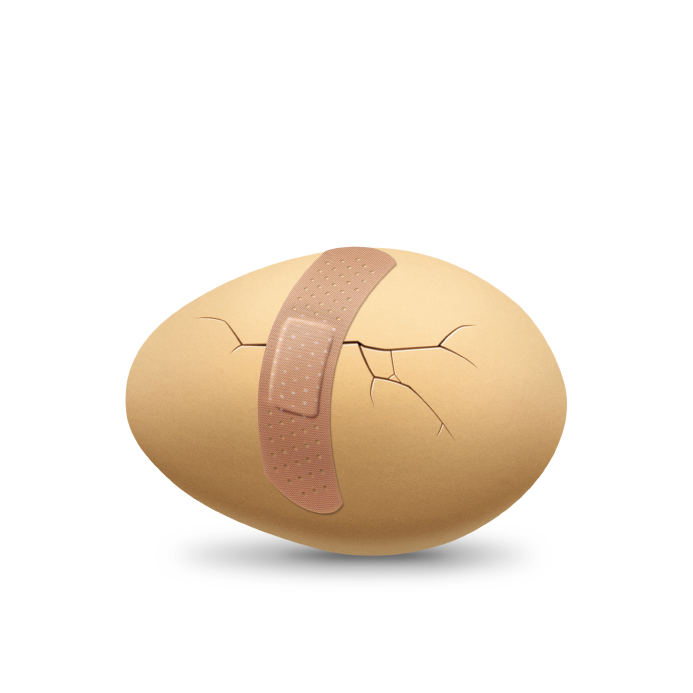
Not too long after that conversation, I heard an advertisement on the radio for some new weight-loss pill. "No harsh diet regimen! No exercise required!" the ad claimed. In short, all of the benefit, trouble-free! Just buy the pill!
On top of these "quick-fix pill" incidents, I read (and heard news reports on) former Pres. Clinton's statement at the Democratic National Convention on Wednesday that "no president, not even me" could, in only four years, solve the problems the country faced in 2008. Yet we, as an electorate, seem to want immediate change in a system that, almost by design, resists such change. And, of course, we want the change to be painless for us; someone else can make the sacrifice.
And then I also heard a news report on some experiments about learning (from an audio source) while we sleep--no work required! As we anticipate the start of another academic year at the University of Denver, I'm sure that there are some on campus who wish that the research behind this study would translate into hard reality . . . NOW. Learning made easy; few demands!
I suppose it's not just "we as an electorate". It's part of our natural make-up that we avoid pain/suffering. But most of us know, too, that becoming better at something requires practice, some exercise, maybe some long hours devoted to a task. Losing weight via a pill is not the same as becoming healthy, which that awful "diet regimen and exercise" might help achieve. We've bought into a story that "looking good" is the same as achieving health.
The same phenomenon may be true in religion/spirituality. Some folk are highly conscious of following all the rules of a particular tradition (i.e. they appear "religious"), but have no depth of compassion. Others might want to "feel good" spiritually themselves, but find no compulsion to change unjust systems. Most historical traditions, however, recognize a variation on the old exercise adage: "No pain, no gain." The real benefits -- both for the individual and for others -- are found in practice, self-discipline, and service. How counter-cultural!
If we truly want change -- political, social, spiritual, emotional -- we're going to have to leave aside the wishes for a quick fix, for a magic pill, for a feel-good moment, and dedicate ourselves to do what it takes for the long haul.
All the best for a great academic year!
Blessings,
Chaplain Gary
Saturday, September 1, 2012
Billboard's Top 100?
|

Subscribe to:
Posts (Atom)