Friday, September 27, 2013

Outside in


     Whenever a new interest grips me, I jump into it fully . . . or at least "fully" as that makes sense to me.  And many of you know that I recently took up fly-fishing as another hobby, so the pattern has repeated itself. Certainly I've taken a class here and there.  And I've gone out on the water with some knowledgable folks, as well as by myself.  What I've done most of, however, is research.  That's pretty normal, I suppose, for someone like me - a scholar.  But . . . books, magazines, videos, internet forums.  Consuming!  But, one of the things to which all of those resources point is something I'm not doing as much of:  Practice!
      Practice, as in "Practice tying knots so you won't fumble around in the cold while fishing."  Practice, as in "Practice your casting so you won't make a fool of yourself, or frustrate a guide."  In other words, the resources are telling me to quit reading/watching, and go DO it!  "But", I ask myself, "doesn't the research mean something?" Well, yes, but maybe not what I expect.
       Several weeks back I was listening to an interview with a filmmaker named Vikram Ghandi.  A few years ago, he made a documentary called "Kumaré" in which he "became" an Indian guru by that name, and gathered around him a devoted group of followers in Arizona.  It was clear to him that these devotees were attracted to him because he looked like, and sounded like, a genuine guru from India.  He was, of course, a fraud.  Yet he became fascinated by how much faith these followers placed in him, how much positive change they had undergone.  And that created a dilemma in him: should he "come clean" and disappoint them or derail their growth?
       Well, he eventually did.  And some of those who followed him became angry and disillusioned.  Others, however, did not.  Some of the latter mentioned that they had been looking for something, and, in Kumaré's teachings and encouragement, they had found it.  What I heard was that they had been looking in from the outside for some answers to their seeking, their yearnings, and Kumaré invited them in to learn for themselves.  What they gained nothing could take away, even learning that the teacher was a fraud.
       This resonated with me in so many ways.  Certainly I can identify with the desire to know something -- like the art of fly-fishing -- and the hope that some guru (instructor/guide/video/author) will magically impart that knowledge, as well as the satisfaction of successfully mastering the art.  But I also look at the "Religion/Spirituality" aisles in Barnes & Noble or Tattered Cover, and see how authors around the world are responding to the needs/desires of millions of people who seem to think that if they finally find the right books/advice on prayer or meditation (for example), they'll have a deeper spiritual life.  The authors aren't necessarily encouraging that almost voyeuristic approach; most give practical advice (that some readers, of course, don't want to actually implement!).
          So, clearly, I'm not alone in my desire to know because it may be simpler than getting out and doing.  Nor do I think that most of us, however, are truly content with being on the outside and looking in.  I suppose it's time to stop looking through the resource at the reality, to put the "book-learnin'" to the test.
          Put the book down. Get out the fly-pole. Find the prayer cushion. And begin the real adventure.
Blessings,

Chaplain Gary

Friday, September 20, 2013

Writing in the Sand


     I grew up in Oregon, about an 1-1/2 hours from the coast.  And I had an aunt and uncle who lived right on the Washington coastline, about a couple of hours away.  Their place was our "default" long weekend away.  In other words, I spent a lot of time at the beach.  But this was the Pacific Northwest!  We spent a lot of time at the beach (i.e., not in the water!).  Being at the beach meant clam-digging, shell-hunting, and sand-writing.  Like most kids who have spent time at the beach, there was always a race to finish the sand-writing, or sand-drawing, or sand-castle-building before the tide came in and washed it all away.  Yet it was inevitable.  The waves would slowly move higher on the beach; nothing could "save" my artwork (few parents would waste their Kodachrome on such things -- not so with with digital cameras!).
      I've thought a lot this week about my time on the beach, drawing, hunting, watching my footprints wash away.  The reason?  The book group I host on a monthly basis this month read Izzeldin Abuelaish's I Shall Not Hope:  A Gaza Doctor's Journey on the Road to Peace and Human Dignity*.  In the opening chapter of the book, Dr. Abueliash tells of an outing to the beach in Palestine with his children.  It was only several weeks after his wife and their mother had died of cancer.  He felt that such an outing would do the family good.  Abuelaish wrote:

That day they all sat for photos besider their names in the sand.  Even Aya and Mayar smiled into the camera.  When the tide came in and washed their names away, they wrote them again, farther up the beach.  To me, this action was highly symbolic of their tenacious, determined nature, one that I recognized in myself.  They had the ability to look for alternatives when situations seemed impossible; they were claiming this tiny piece of land as the own--because they believed that they belonged here and did not want to be erased.**

In a few weeks, Aya, Mayar, their older sister Bassan, and a cousin, would be killed during a tank shelling of their home.  The book is an account of what enabled their father not to react out of hatred and vengeance in a land where that was the norm.
      Abuelaish was faced with an incredible loss.  Something, however, in his life and faith would not let him be overwhelmed.  Throughout the book he writes of "turning bad into good" . . . and he had ample opportunities to practice that maxim.  It is an amazing story.  (If you search for his name in YouTube, you will find many hits.  I recommend the TEDxWaterloo video.)
      The story of turning bad into good is a story I've heard several times this week as well, as other people have faced incredible losses.  The airwaves and print media are full of accounts of folks who've lost their homes in the Colorado floods.  Many are dejected, as could easily be expected.  Others, however, are more forward thinking (as have been folks who have experienced our fires in the last couple of years):  "We'll rebuild.  It'll take a while, but we'll rebuild.  This is our home."
      And last Sunday night, at the memorial service for two fraternity brothers tragically killed in a house fire in Connecticut a month ago, the mood, while somber, aimed at the positive.  One of the boys' parents, in a letter to the gathering, wrote:  "Keep [these boys] in your hearts and live your lives in the moment--with great enthusiasm and love, love, love."  The other boy's mother wrote:  "It is the wonderful memories that we need to hold close to our hearts now.  [He] would want no tears or heartache.  [He] would want celebration and togetherness--laughter, love and joy."   Another letter urged the attendees to "use their tragic deaths . . . as a reason to be the best person and leader you were born to be and encourage those around you to do the same." ***
      Our lives are full of "writing in the sand" moments; indeed one might say WE are writings in the sand.  Something inevitably will wash over us:  a broken relationship, a unexpectedly poor grade, a death.  The challenge is whether we will be "overwhelmed", or whether we will move "farther up the beach", looking "for alternatives when situations [seem] impossible".  I am so encouraged by those who've suffered such great losses -- Abuelaish, the flood victims, and the parents of the young men -- how they, in the midst of their pain, can see a way forward, and encourage others to do the same.
      May I honor their charge, and never stop writing in the sand even when I know it will be washed away.
Blessings,

Chaplain Gary

* (Walker & Company, 2010, 2011).
** p. 14.
*** An article about the memorial service was published in this week's Clarion, DU's student paper.  It can be accessed on-line here.

Friday, September 13, 2013

Keeper of the Torn Cloak


      Last Saturday, I staffed a table at the Pioneer Carnival, the main "resource fair" for incoming students at the University of Denver.  It is one of the last events of the orientation week, and provides an opportunity for student organizations, local businesses and various campus offices to talk with students, and to invite them to become involved.  It's always a noisy, organized-chaos, sort of event.  And it's a lot of fun.
      When students com up to my table, one of the questions they often ask, evenafter staring at the table cover and all the brochures, is "What's this club do?"  I explain that I'm the University Chaplain, and that I oversee religious life on the campus, and help students make connections with the religious groups of their choice/interest.  Sometimes, they'll mention a particular group, and I'll point the way.  Other times, I'll get a follow-up a question:  "What's a chaplain?"  And that's a question I often get, even away from resource fairs; I was asked it at a religious student group meeting this week!  And, so, since I get asked it often enough, I thought I'd take a few moments, at the beginning of this academic year to answer it.  But, to do it, I'll have to get all historical.
       In the 4th century of our era, the story goes, a Roman soldier named Martin (from the city of Tours) found himself face-to-face with a beggar outside the city gates of Amiens.  It was a cold day, and Martin noted that the beggar had little to keep himself warm.  Out of compassion, the soldier cut his own cloak in half, and gave half to the beggar.  That night Martin had a dream in which Jesus was wearing the cloak that Martin had given the beggar.
       That cloak -- in some version of the story, it had been made whole by the time Martin awoke from the dream -- became a sacred relic and was sometimes carried into battle by the Merovingian kings.  The priest who cared for the cloak (in Latin, cappa) was called the cappelanu.  Military priests then all became referred to as cappelani, or in French, chapelains . . . chaplains.  Similarly, the small churches built to house the relic were called cappela (or "little cloak").  Later, even after the churches no longer contained the cloak, they retained the name capella or "chapel".  The clergy person in charge of the "chapel" retained the title "chaplain."
       So, one could say that, since I have charge of the University's Evans Chapel, I have the title "Chaplain".  But I, and other chaplains, also fill other roles, and here will quote from a description found on the Hartford Seminary's website describing an Islamic chaplaincy

A chaplain is a professional who offers spiritual advice and care in a specific institutional context, such as a military unit or a college campus, hospital or prison. Although chaplains often provide religious services for members of their own faith communities, the main role of a chaplain is to facilitate or accommodate the religious needs of all individuals in the institution in which he or she is working. Chaplains often serve as experts on ethics to their colleagues and employers, providing insight to such diverse issues as organ transplantation, just-warfare, and public policy. Professional chaplains do not displace local religious leaders, but fill the special requirements involved in intense institutional environments.

That seems to be a pretty good description of much of what I do (although I'm not so sure I'd claim the distinction of being an "expert on ethics"!).  On the other hand, sometimes in answer to the question "What's a chaplain?", I often answer by saying, "Well, I something of a cross between Fr. Mulcahey on M.A.S.H and a medieval court jester*."  That often elicits a smile of understanding.
         What I would ultimately hope, however, is that I, and other chaplains, faithfully execute the care and hospitality represented by Martin's torn cloak.

Blessings,

Chaplain Gary

*A "jester", not so much as being a funny, foolish, figure, but as one given the right, or responsibility, of speaking truth to power.

Friday, August 23, 2013

Hospitality? Radical!


          When walking around DU, I often encounter campus tours in progress. I'm always curious to hear what the tour guide is saying; I may learn some new tidbit about DU, or some "slant" on the school coming from the guide's own perspective. And then, there are the questions raised by the visitors about buildings or sculptures. The pineapple on the Knoebel School of Hospitality Management (above) almost always receives some question/comment. The question usually goes "What's with the pineapple?" The answer, "Oh, the pineapple is a symbol of hospitality. This is the hospitality management school."
          True, that! But there's more to the story . . . or, at least I've heard more to that story. When we were living in North Carolina a couple of decades ago, we learned about the pineapple. It seems that when merchant sailors (especially ships' officers) would return from their voyages, they would post a pineapple on their front gate/fence. It was an announcement that they were home from pineapple-laden climes, and were ready to receive visitors. But, in addition to being an announcement, the pineapple was also an invitation: "Please drop by, and let me be your host!" Hospitality is also an act of anticipation and reaching out, not simply responding to a request.
          Hospitality was one of the primary virtues instilled in me by my family when I was growing up. The topic came up in a conversation with a colleague yesterday. This morning, as that colleague and I were both volunteering at Metro CareRing, the matter was before us all the time: the folks coming through the door, whatever their situation, were to be treated with utmost respect and hospitality. And, since many of them don't often experience that kind of treatment in other places, the light in their eyes shows how much it is appreciated.
           Of course, hospitality is one of the most central tenets in most religious traditions. "Welcome the stranger, the other!" we are taught. Examples abound: in the New Testament book of Hebrews, the author counsels: "remember always to welcome strangers, for by doing this, some people have entertained angels without knowing it" (13.2). or, from Hindu Scriptures: "The husband and wife of the house should not turn away any who comes at eating time and asks for food. If food is not available, a place to rest, water for refreshing one's self, a reed mat to lay one's self on, and pleasing words entertaining the guest--these at least never fail in the houses of the good" (Apastamba Dharma Sutra 8.2). What hospitality essentially does is to reverse power roles. The true host becomes the servant; the one who has becomes the one who gives, who serves. And the guest becomes royalty!
          Since I walk by the hospitality school just about every day, I'm ALWAYS reminded of the story of the pineapple. I'm also reminded of the importance of hospitality -- and the invitation to practice that radical virtue of using my power to turn strangers into royalty.
       
Blessings,

Chaplain Gary

Friday, August 9, 2013

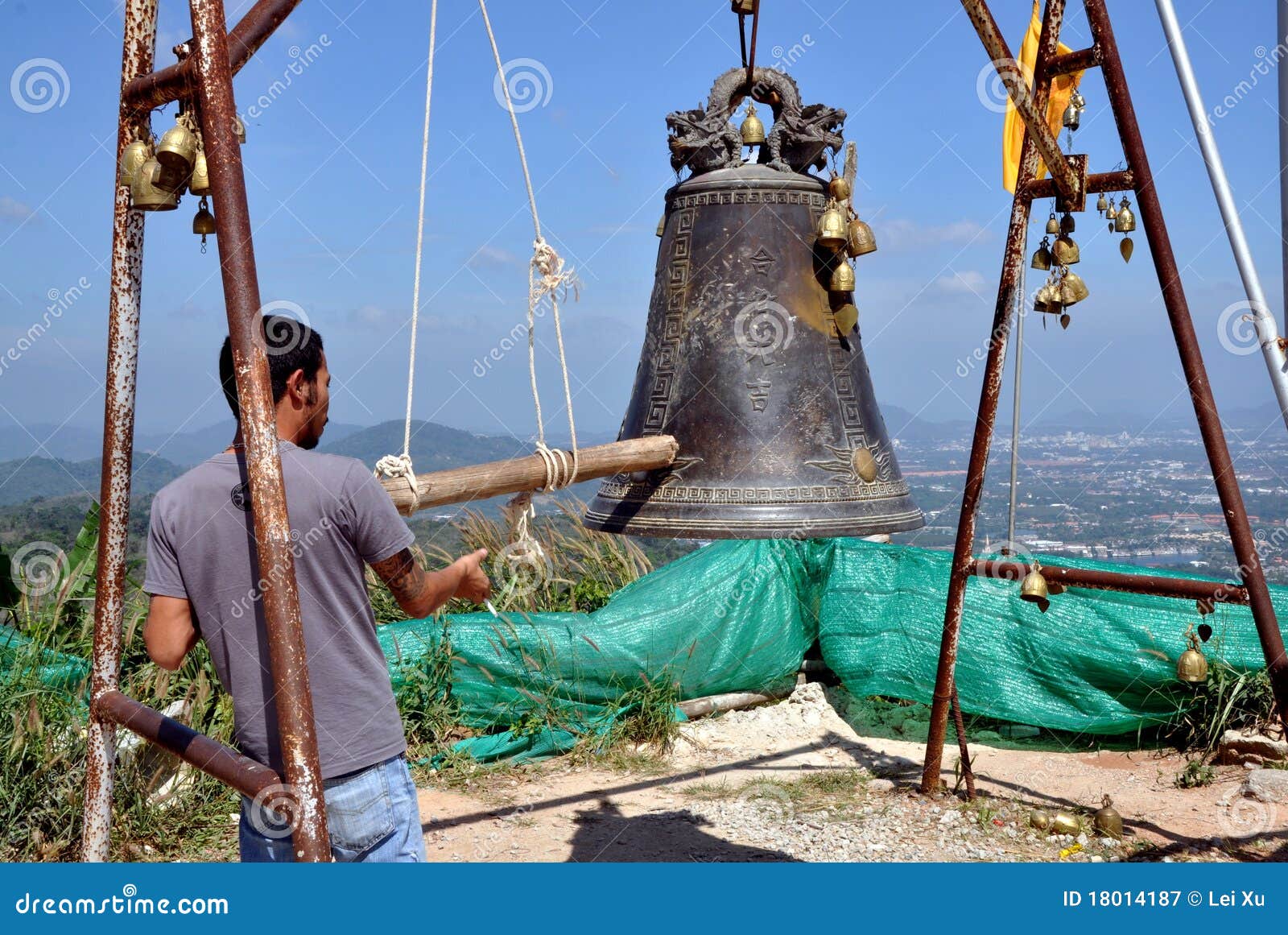
You can't un-ring a bell

      The conference my son and I have been attending this last week at Lake Tahoe celebrates its 80th anniversary this year.  Started as a youth conference in the 1930's, it has evolved into a family conference, as those youth (as youth will do) ages into adults, parents and grandparents.  One conference, several years ago, I remember three generations of one family all in attendance.  Kids who grew up together, but moved away return to renew friendships, compare notes on kid-rearing, and bask in the beauty that is Lake Tahoe.
      As many of us often do at anniversaries, the theme of the conference demanded that we look back over the past, and then look ahead into the future.  In the reflective times, the memories were rich, both of significant events/program features, as well of many of the "characters" who've attended over the years. And, at the close, we were invited, as often happens at conferences, to submit an evaluation--an evaluation that included those common questions:  "What did you like best?" and a variation of "What did you like least?"  Having been on many conference planning teams reading evaluations (as well as reading my own teaching evaluations), I know that we all tend to spend more time on the "What did you like least?" question.
      I know that we want to prevent as many "negative experiences" as possible, especially those that are "fixable".  But what some folks like will drive others batty.  We're not going to be able to fix everything -- and certainly things in the past.
       The conference also provides plenty of free time, and I had the opportunity to read things that I otherwise might not have had time for.  In one of those books, one character says to another, "We all have things in our past we regret--people we regret--but you can't unring a bell."*   I was reminded by that, too, of a something Dietrich Bonhoeffer wrote that I read each morning:  "Every new morning is a new beginning of our life. Every day is a completed whole."**  And, then, this morning, another saying appeared in my email inbox:  "I realize there's something incredibly honest about trees in winter, how they're experts at letting things go."***
       Our deeds, actions, relationships -- all are like ringing a bell.  The effect travels in waves, influencing things we cannot control.  And we certainly can't "un-ring" that bell.  The 80 years of my conference have sent ripples around the world.  Our task, going forward, is to recall the pleasant sounds, and to labor in order that they are repeated.
            
Blessings, 

Chaplain Gary 

*  Sgt. Don Malarkey to Joy Toye in Easy Company Soldier (St. Martin's Press, 2008), p. 121.
**  I can't remember the precise source any more.

Friday, July 26, 2013

Road trip!

       Just about twenty-five years ago this week, I was busy packing a truck, getting ready to move from Los Angeles, CA to Durham, NC.  I was preparing to start graduate school at Duke University, and I was excited to get there, and to begin my program. All that stood between me and that new life was 2500 miles of road in the front of a rental truck.  Fortunately, I wasn't going to make the trip alone; my dad was going to share the driving.  
       We had it mapped out -- relatively efficiently.  We were, after all, limited somewhat in the amount of time we might take by the rental contract.  And, since my sister lived in Houston, Texas, we wanted to spend some time with her (and getout of the cab of the truck for more than a few hours).  That said, however, we wanted to push the envelope on the driving side.   So, on day one we left LA at about 6 am, and drove to El Paso, TX -- 700 miles; day two was El Paso to Houston -- 700 miles (dang! Texas is BIG!).  After several days in Houston, it was back on the road, to Birmingham, AL -- 600 miles.  The last day was the short one, Birmingham to Durham, NC -- 500 miles.  We got into Durham in time to drop the towed car, stow some things in the apartment, and head off to a fabulous Bed & Breakfast for an easy, and enjoyable, arrival evening.
        The next day, of course, was all about unpacking the truck.  Two grown men and a hand truck!  All the boxes and furniture, of course,  But also . . . . a washer and dryer to the basement (down a stair way that wasn't designed for modern appliances!).  A piano (!) up the front steps -- about six of 'em if I remember correctly.  "If I remember correctly" is key. Yes, it was twenty-five years ago.  But mostly, those kinds of arriving-at-the-destination-related memories fade in the face of BEING THERE!  I was in Durham!  In a couple of days, I would begin my graduate program at Duke!  I'd arrived!
        Looking back, however, the real memories of that week are not related to the stairwell to the new basement, or trying to find the local grocery store.  The real memory--the real value--of that week of travel was a chance to get to know my traveling companion in a way that would have probably never happened otherwise  The real memories include:  crossing the Continental Divide in Arizona (there's a sign that says so -- but my dad missed the moment, changing a cassette tape in the player);  the huge thunderstorm in eastern New Mexico where we had to pull over to let the hail pass; the late night swim at the hotel in El Paso; the beautiful streams and scenery of west Texas, and stopping to put our feet in cool water; learning that "don't back up while towing a car" is actually good advice!  And, there are parts of the early evening at the B&B in Durham that are indelibly imprinted on my memory -- such as the circumstances of meeting the Chair of Duke's Religion Department for the first time -- that I'll keep to myself!
      Travel was the centerpiece of an early part of conversation of which I was a part the other day.  The discussion was about the places people had been already this summer, and where they might yet be going.  Stories of Europe and Asia drew "oohs" and "ahs".  Some of the rest of us half-heartedly chimed in "New England" or "Kansas".  And, of course, I could have talked about my solo drive in the front of a rental truck from Portland to Denver a few weeks ago.  But I realized that some of the other trips were also "solo" trips, and how different those and mine were -- enjoyable as they may have been -- than a trip with a companion.
     And, yes, there is a "spiritual" lesson here.  But I doubt I need to belabor the point.  I'll simply quote a Colorado author whose writings I've come to enjoy.  John Gierach is writing about going on fishing trips with a good friend, the well-known (in fly-fishing circles), A.K. Best:

It's not that A.K. is a snob exactly, it's more that he just knows what he likes, and I appreciate that.  My tastes are a little more eclectic than his but I guess that's why most of us end up with more than one friend.  (I have friends who've been known to shoot carp through thin ice with shotguns, so there's lots of leeway there.)  And anyway, in the long run, a trip is more about who you're traveling with than where you go or what you're after.*

Thanks, dad, for being my traveling companion!  It was an unforgettable road-trip.  And I'm equally grateful for all of the companions I've had on my spiritual journey as well!  Solo spirituality doesn't hold a candle to community!
            
Blessings, 

Chaplain Gary 

*"Where to Fish", Standing in a River Waving a Stick (Simon & Schuster, 1999) pp. 188-89.

Friday, July 12, 2013

Shock? and Awe!

        Many years ago, I took part in a CPE program.  "CPE" stands for "Clinical Pastoral Education", and is generally required now for  people who are interested in entering into the ordained ministry in many Christian and Jewish denominations.  As the title implies, those who are part of the program are placed in a clinical setting (it could be a hospital, a prison, a retirement facility, etc.) and use the encounters in their day-to-day work as grist for reflection with a supervisor and in a small group.  Another model of CPE is known as "parish-based" -- that is, the participants use their current work-place as the "clinic" from which they draw the vignettes for reflection.  My program was such a "parish-based" program.
        One of my fellow participants was already pastoring a couple of small churches in southern Virginia, and was going through CPE to equip him for future placements.  One week, he came to the group meeting very visibly shaken up.  This was pretty out of character, since he was usually very confident, almost to the point of being cocky.  As our group conversation progressed, it emerged that he had been wrongly accused of some misbehavior, but that the word had travelled around quickly through his various church-related circles.  His reputation was tarnished and his confidence shot.  As we in the group discussed this with him, he said something to the effect, "I just can't believe that this is happening in a church!  We're supposed to be about loving each other, and caring for each other!"  His worldview came crashing in all about him; he wasn't sure how to, or if he could, go on.
        The rules on which he relied no longer reflected reality.  Certainty, confidence -- things of the past.
        My colleague's experience -- and dismay -- is pretty common.  I certainly want certainty, especially moral certainty.  I find that predictability helps me negotiate all of the stuff I need to manage every day.  And most of us also want fairness, and what is predictable is usually predicated on some notion of fairness.  And many of us often "find" an external source, or ground, for that fairness or predictability we desire.  And, of course, our religious traditions have tried to "help" us with that:  "Do good (as God would want), and you'll prosper!"  But, as the biblical book of Job (as well as other writers) points out, it doesn't always work that way!  Job, the just man, suffers immeasurably for no apparent reason.  That story line can't have appeared out of thin air; it reflects our common frustration with the lack of "fairness".  In other words, the world as we wish it, is "out of order."  The resolution (whether satisfying or not) to Job's situation is that he'd never fully understand; there are things far beyond his, or anyone's, ability to comprehend.  And Job had to sit back in awe.
        I've been struck recently, in my reading of the Hebrew and Christian scriptures, of this tension:  there seems to be a predictability to the moral universe (or there are those who think it should be), but it doesn't always play out.   And often the way of dealing with that dilemma is to place the resolution in the far distant future.  In other words, our notions of fairness are not necessarily out-of-whack, it's our time frame!  The same tension/solution I see in science as well.  What physicists were certain was the case -- in terms of Newtonian physics, for example -- has become thrown into question by quantum physics and chaos theory.  Yet, as I read the scientific materials, the hope is still held out that, somewhere in the future, we'll understand it all.
        I don't know.  I want certainty; we want certainty . . . but there doesn't seem to be certainty.  I want the world to work logically and justly, as I imagine most of us do . . . but it doesn't seem to work that way.  It's a shock to my system that myway of perceiving the world, given my tools, and my understanding, doesn't work the way I want it to.   And pushing things off to some future afterlife isn't very satisfying for dealing with real-world problems right now
        Awe, I suppose, is what's left.  A lesson in humility in the face of that which is larger than me.  But that shouldn't keep me from seeking to create some order out of the chaos -- social, legal, cultural, ethical, political -- in which I find myself.  Of that I am certain.
     
Blessings, 

Chaplain Gary