
There has been a "strange nexus in the Force" this week, as many things I've been reading, and hearing, have pointed in (primarily) the same direction. The first was aninterview with two leaders among, what are called, the "New Evangelicals". One was Jim Daly, the new president of Focus on the Family; the other was Gabe Lyons a younger man who is the founder of a sort of TED-like group called "Q: Ideas for the Common Good". Daly was picked to follow upon Focus's founder, James Dobson. Lyons was brought up in Lynchburg, VA, the home of Jerry Falwell's church and college (Liberty University) -- and he was a product of all that Lynchburg offered.
In the interview, both men realized that the presentation of Christianity that they had inherited was increasingly viewed with suspicion (especially among the younger generation), and was not necessarily what THEY understood the Christian message truly to be about. Daly pointed out that his organization had been "gentle to those inside" and "harsh to those outside" the faith-boundaries. And, he observed, Jesus' behavior was exactly the opposite: calling to task the "religious" folks, and welcoming those from without the fold. He suggested that members of religious traditions (in his, case, certainly, Christians) should spend more time calling their own to faithfulness instead of lambasting the culture for not living up to the standards the faithful themselves couldn't achieve. I have also been reading the New Testament book, the Acts of the Apostles. This is a story of the early expansion of the Christian movement in the first few decades after the death of Jesus. In a couple of places, the apostle Paul (and his message) comes into contact with significant centers of Greco-Roman culture: Athens and Ephesus. Athens, of course, was a center of learning and philosophy; Ephesus a great trade center, as well as cultic center for the goddess Artemis. In Athens, Paul observes (with some disappointment) how many "idols" dotted the city (Acts 17.22-32). Yet, in his speech to the citizens, he doesn't criticize the Athenians, but rather starts with their propensity to religiosity. That approach generates some dialogue. In Ephesus, the story was a bit different (Acts 19.23-41). After spending several years there, the early Christian community had been successful enough that, for some reason, some of the business folks felt threatened enough to stir up a mob. There is no indication in Acts that the Christians were being critical of the Artemis cult; they were apparently just keeping to themselves, but living a lifestyle that, itself, was perceived as a threat, perhaps because it was more attractive than the civic religion. The third part of the nexus is simply all the political advertising to which we've been subjected these last few weeks (and which will only intensify over the next few). Both sides are spending vast amounts of money criticizing the other. Significantly fewer ads trumpet successes. The theory seems to be "Create fear of the other! And then we'll have a large group of fearful people who will vote the same way, although they may agree on little else!" What are our own (individual and collective) strengths and weaknesses? Maybe focusing there might be a good idea. Who knows, if our own house were more attractive, we might get more visitors? Or, put another way, perhaps if we tend to our inner workings, we may get to the point where we can fly?
Blessings,
Chaplain Gary
|

Friday, September 28, 2012
From the inside, out.

Friday, September 21, 2012
Cultivating joy!

Last evening my wife and I went to a DU volleyball game; it was the team's first real home game of the year. We had learned to really enjoy volleyball last year, and had been looking forward to the fall for some time. We were not disappointed. It was an exciting match, and DU's ultimate victory (3-0) was the icing on the cake.
As Coach Mahoney said in a post-game tweet, the atmosphere was fun. And a lot of what made it fun was the presence of several of the other teams. Last year the men's swim team became de-facto cheerleaders (with a twist -- you'll have to attend a game to see what that is!). This year, the swim team was joined by the men's basketball who did their level best to distract the opposition. Given the fact that they were all dressed like refugees from a Jane Fonda or Richard Simmons aerobics video, that the other team was able to focus at all was a testimony to their training and focus. And then the gymnastics team, on the opposite side of the floor from us, was cheering loudly and doing cartwheels in the bleachers when we scored. Members of the Athletics administration, most of the fans, and we were smiling broadly throughout the match. It was fun; it was joyful. After we got home, I was reflecting on the mood of the evening. The smiles. The laughter. The excitement. The joy. Joy. An emotion, or feeling, that we probably don't feel enough these days. The economy, armed conflicts abroad, a combative election season-all often serve to keep our mood, individual and collective, subdued. I wonder what would happen, if we were to seek out, or work to create, more experiences of joy for ourselves and others. I know that I slept better last night than in many days. I awoke more refreshed, and with a better outlook for the day to come. So, I wonder if that infusion of joy could be compounded. That is, if there were more experiences, more often, my inner compass would re-orient slightly. A ponderable. Can we cultivate joy? One thing's for certain! Many more volleyball games this fall!
Blessings,
Chaplain Gary
|
Friday, September 14, 2012
Connection. So important!

Indeed, over the five years I have been at DU, I've been a part of numerous funerals/memorials. It is always a humbling honor, to be invited into such a raw situation. One thing, however, profoundly has struck me over the last couple of weeks: I have wished I had known all of those folks better. A pretty common feature of memorial services in this day of PowerPoint or iPhoto slideshows is a video montage, drawing together moments of the individual's life. Added to that are all of the memories, professional and personal, that friends, family and colleagues bring to the ceremony. We often hear the favorite songs or poems. Themes arise. From housekeepers to administrators, students to professors, children to parents . . . every person has a story. A unique, funny, wrenching, gripping, everyday story. Memorials provide an opportunity to hear them, to share them, to marvel at the beauty of lives lived.
I often don't know the person being memorialized very well; sometimes I don't know them at all. But I often leave the service feeling like I've missed something by not knowing them. I know I can't know everyone, so that's not the point. It is rare enough to be invited into that inner circle for a moment . . . and I cherish it.
No, I can't know everyone. But I come into contact with folks every day; we all do. And for many reasons we often shrug off the opportunities to enter into the other person's story. We miss their richness because we're too busy, too pre-occupied. Or we may be too shy, too reticent, to share our lives. And I believe, given the experience of these last few months, we are poorer for it. Television. Internet. Fences. Distractions. All keep us apart, or provide excuses for making the connections we all crave.
We miss one another, in more ways than one.
I, for one, want to hear your stories now. So, interrupt me. Remind me of this. And hold me, and each other, accountable.
Blessings,
Chaplain Gary
Friday, September 7, 2012
No quick fix, so . . . buckle down
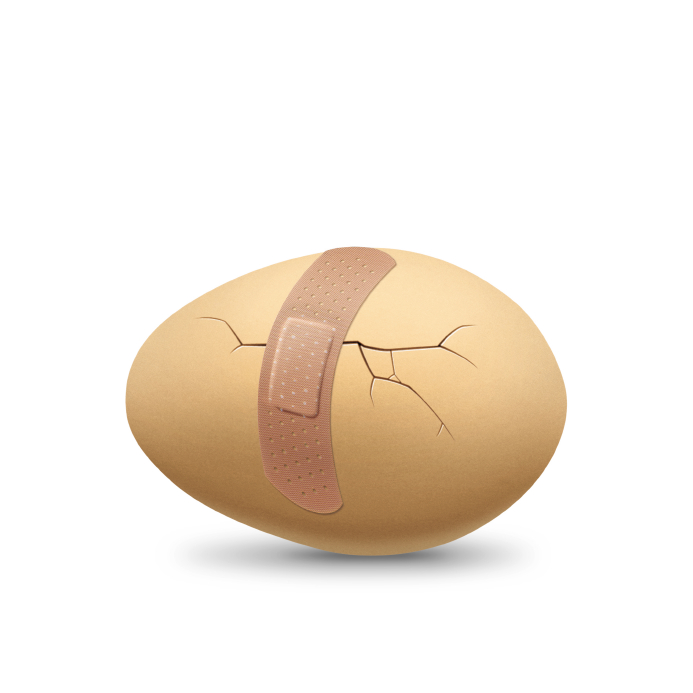
Not too long after that conversation, I heard an advertisement on the radio for some new weight-loss pill. "No harsh diet regimen! No exercise required!" the ad claimed. In short, all of the benefit, trouble-free! Just buy the pill!
On top of these "quick-fix pill" incidents, I read (and heard news reports on) former Pres. Clinton's statement at the Democratic National Convention on Wednesday that "no president, not even me" could, in only four years, solve the problems the country faced in 2008. Yet we, as an electorate, seem to want immediate change in a system that, almost by design, resists such change. And, of course, we want the change to be painless for us; someone else can make the sacrifice.
And then I also heard a news report on some experiments about learning (from an audio source) while we sleep--no work required! As we anticipate the start of another academic year at the University of Denver, I'm sure that there are some on campus who wish that the research behind this study would translate into hard reality . . . NOW. Learning made easy; few demands!
I suppose it's not just "we as an electorate". It's part of our natural make-up that we avoid pain/suffering. But most of us know, too, that becoming better at something requires practice, some exercise, maybe some long hours devoted to a task. Losing weight via a pill is not the same as becoming healthy, which that awful "diet regimen and exercise" might help achieve. We've bought into a story that "looking good" is the same as achieving health.
The same phenomenon may be true in religion/spirituality. Some folk are highly conscious of following all the rules of a particular tradition (i.e. they appear "religious"), but have no depth of compassion. Others might want to "feel good" spiritually themselves, but find no compulsion to change unjust systems. Most historical traditions, however, recognize a variation on the old exercise adage: "No pain, no gain." The real benefits -- both for the individual and for others -- are found in practice, self-discipline, and service. How counter-cultural!
If we truly want change -- political, social, spiritual, emotional -- we're going to have to leave aside the wishes for a quick fix, for a magic pill, for a feel-good moment, and dedicate ourselves to do what it takes for the long haul.
All the best for a great academic year!
Blessings,
Chaplain Gary
Saturday, September 1, 2012
Billboard's Top 100?
|

Friday, August 17, 2012
Central or peripheral

| In the days following the shooting at the Sikh gurdwara in Wisconsin, numerous interviews were aired on radio about the basic tenets of the Sikh religion. Questions seemed to focus mostly on turbans and beards--both visible markers of observant Sikh men. The reason for that focus seems to be the confusion/identification between Sikhs and Muslims in the years after 9/11. I was reminded of another problem associated with the tenets of the Sikh faith--especially in post-9/11 America: the wearing of the kirpan, or ceremonial dagger. To many in law enforcement, it was seen as a weapon, and not to be allowed on airplanes or in schools or prisons. To be forced not to wear the kirpan became very problematic to faithful Sikh men. Listening to those interviews gave me occasion to reflect on the external "pieces" of our religious traditions. The question that has kept nagging at me is: "What features of a religious tradition are so central, that to lose--or be forced to forego--(some of) them would cause a crisis of faith?" For many traditions over the centuries, this has been a reality, but for most of us, we've not been forced to make a choice. The Jewish people, for example, have experienced the loss of their cultic center, the Jerusalem Temple, as well as their homeland, more than once. A crisis of faith, to be sure! Psalm 137 reflects the anguish of exile: "How can we sing the Lord's song in an alien land?" Yet, most were able to understand their faithfulness to Torah in a way that was not so site-specific. In other situations, however, given a choice between being forced to violate Torah or die, many chose death. What is central? The earliest Christians were Jewish. Yet, as the movement expanded beyond its Middle Eastern roots and began including non-Jews, the question arose as to how much of the Jewish legal code had to be observed by non-Jewish converts. Again, the question of centrality forced soul-searching and choices. And the process wasn't nice and neat. Irish Roman Catholics (as well as non-Anglican Protestants), in the 16th and 17th centuries, had their religious practices severely curtailed by the British. They could not hold public office. They could not worship publicly -- or give public evidence of their faith. For many, who found praying the Rosary a central part of their practice, this was very problematic. The clever among them designed, what came to be known as, the "Irish Penal Rosary", which could be worn hidden and prayed without worry of detection. An "external" practice had become so central that rather than forsake it, they chose to remake it. Around the world today there are still plenty of places where such choices are being forced upon the faithful of many traditions. The impetus for conformity in societies is strong (including our own). Not really being subject to such coercion, however, I still have to wonder what I could forego without losing the core of my faith. What part of worship, or music, or (as an Anglican) the Book of Common Prayer, is so central? Language, for many, is critical. I wonder, if I were Muslim, what would be the impact of the loss of the Kaaba in Mecca. There are many other similar features in almost all religions. So, central, or peripheral? The questions remain to be answered by us all. Blessings, Chaplain Gary |
Friday, August 3, 2012
For purely symbolic reasons . . .

A definition I like of "symbols" is that they are "words or things that open out onto a plurality of possible meanings, and still have a superplus [sic] of meaning left over."* Thinking just about Ground Zero -- how many different meanings can we apply? Or, using a different event, how many meanings can be applied to "Hiroshima" -- which will, no doubt, come up in the news this coming Monday, as we recall the nuclear bombing of that city in 1945? In either case are the meanings exhausted by the protagonists/antagonists/witnesses? There is a memorial that has sprung up near the site of the Aurora shootings of two weeks ago. It symbolizes something different for different people, e.g., a remembrance of those lost, a critique of gun laws, a pledge to make things different.
At the University of Denver, we've been engaging in a long process of discerning our "brand" -- what does the University mean to various constituencies, and how best can we depict that visually. The "logo" is meant to symbolize the University, but no one person--faculty, student, alum, donor, potential employer--will understand the logo the same. Nor should they! (Note: the new logo is at the bottom of this newsletter.)
A few weeks ago, I heard a radio call-in contest that asked the question "Which symbol most represents the USA?" I don't remember the "winning" answer, but you can imagine the answers: the American flag, Statue of Liberty, dollar bill, bald eagle, the White House, etc. And, how important are they! Wow, if politicians don't sport a Flag Lapel Pin, their patriotism is suspect. The flag, as symbol, means something. But to some, it means "America, love it or leave it", while, to others, it can mean "In this free land, I can protest injustice and be a proud American." To others, perhaps non-Americans, it represents a colonial power; to yet others, an aspirational dream.
What spawned all of this reflection on symbols was hearing a reporter comment on some political action or vote: "It was done for purely symbolic reasons." Cheapening a rich word, I thought. Clearly NOT done for symbolic reasons, but to make a pointed, political, one-dimensional statement. If we're going to cheapen the word "symbol" (as we have done with the word "myth"), we're not far from cheapening the power of symbols (as we have done with myths).
As a religious person, and a scholar of religions, I'm aware of the rich symbolic tradition we all hold. The symbols we claim, we use, we cherish are NOT one-dimensional. What, in our various traditions, are symbolized by different foods? Bread: leavened or un-leavened? Butter? Wine? Rice? What about water? Cleansing from impurity. Entry into a new community. Symbol of creation. What about fire? The symbols depicted above are all rich with meaning, layers upon layers.
So, in my reading of sacred texts over the last week, I've been hyper-aware of the symbols present in those writings. I've been hyper-aware, to of the symbols I've seen in the Olympic events, in the commercials, in the language used by commentators. It has enriched my week, and opened my eyes, my mind and heart. Purely symbolic!
Blessings,
Chaplain Gary
*Bean, Wendell C., and William G. Doty. Myths, Rites, Symbols: A Mircea Eliade Reader. (Harper Colophon, 1976), 342.

Subscribe to:
Posts (Atom)